Healthy Lunchboxes for Adults – Ideas That Really Work in Everyday Life
A healthy lunchbox often sounds easier than it is in everyday life. Between appointments, commuting, and limited time, it’s easy to just grab whatever’s available. That’s exactly why it’s worth taking a practical look at the issue: What can realistically be prepared, keeps you full for a long time, and works even when the day doesn’t go as planned?
A good lunchbox isn’t “perfect nutrition.” It’s a solution that can be implemented regularly.
How to spot a truly practical lunchbox
Many lunchboxes fail because, while they seem “healthy,” they don’t keep you full for long. A salad without protein or a meal consisting solely of carbohydrates often leaves you hungry again two hours later.
In practice, a simple structure has proven effective:
A balanced meal ideally consists of several components that supply the body with energy while keeping you full for a long time. First and foremost, you need a component that provides energy. This primarily includes whole-grain products, rice, or potatoes, as they are rich in complex carbohydrates and give the body sustained energy over a longer period.
This is complemented by a filling component. Foods like eggs, legumes, cheese, meat, or tofu provide valuable protein and ensure that you feel satisfied and full longer after eating.
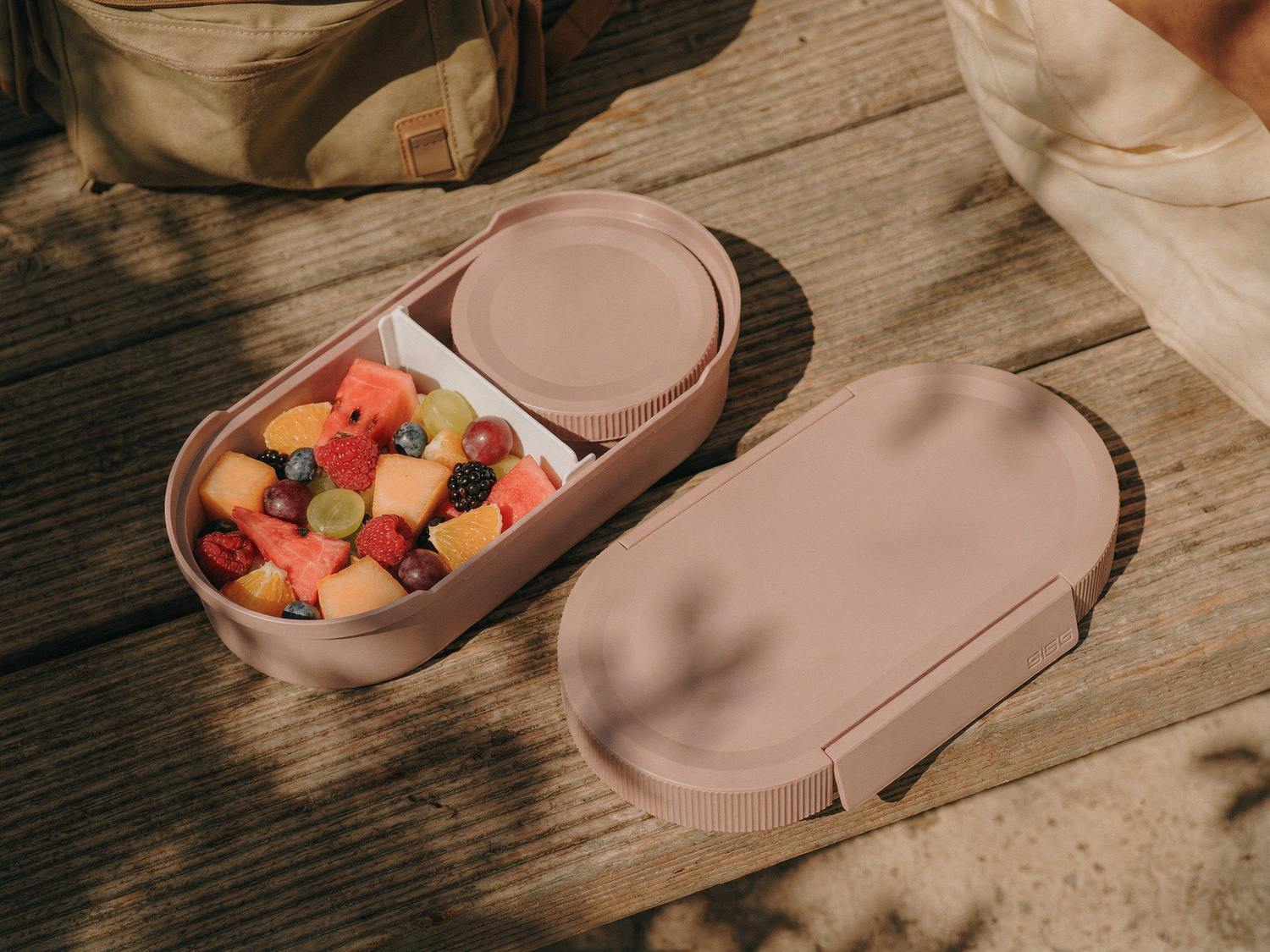
You should also include something fresh, such as vegetables or fruit. These provide important vitamins, minerals, and fiber while adding color and freshness to your plate.
The meal is rounded out by a source of fat, which not only adds flavor but also contributes to satiety. Nuts, seeds, or high-quality oils are good examples here. It sounds unspectacular—but it works reliably.
Ideas that are easy to implement
Here are a few suggestions for a healthy lunchbox on the go:
1. Make use of leftovers instead of cooking from scratch
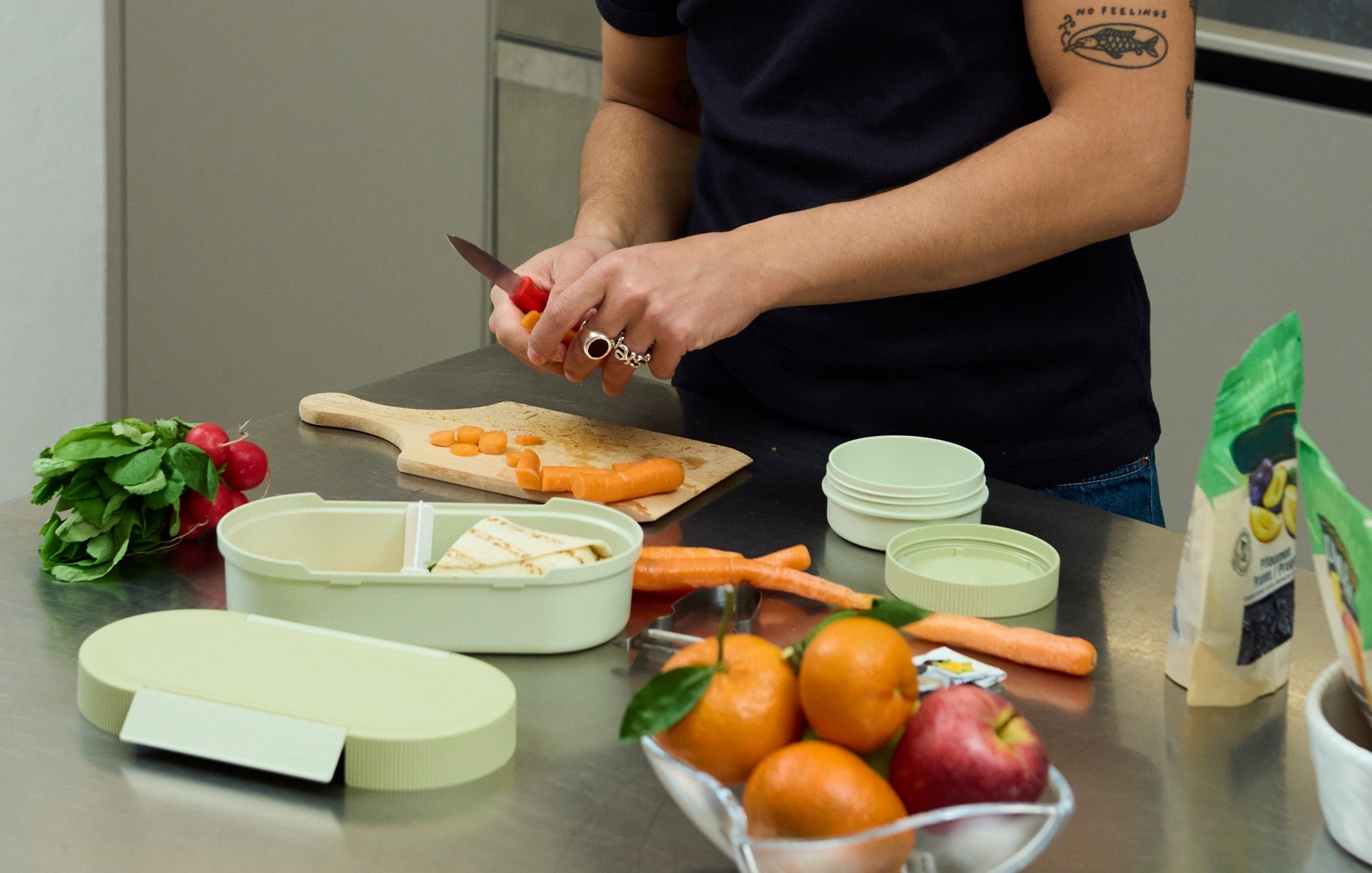
One of the simplest solutions is to plan your dinner with your lunch in mind. Cooked rice, roasted vegetables, or pasta can easily be packed for the next day. Paired with a source of protein, you have a complete meal with no extra effort.
2. The “assembled” lunchbox
Not every meal has to be cooked. A combination of whole-grain bread, cheese, hard-boiled eggs, nuts, and sliced vegetables is quick to prepare and surprisingly balanced. This option works especially well on days when you’re short on time.
3. Bowls as a flexible go-to option
Bowls aren’t just a trend—they’re practical. A base like quinoa or couscous, plus vegetables and a protein source—done. The advantage: You can prepare the individual components and mix and match them in different ways without getting bored.
4. Hot dishes in larger quantities
Dishes like lentil stew, curry, or chili are great for making ahead. They keep for several days and often taste even better once they’ve had time to sit. For many, this is the most stress-free option.
Why planning is more important than motivation
In everyday life, it’s rarely motivation that determines whether you eat healthily, but preparation. If nothing is ready, you improvise—and that often ends up with quick but unbalanced options.
It’s often enough to have just two or three basic ingredients in the fridge: cooked carbs, prepped veggies, and a protein source. With these, you can put together a lunchbox in just a few minutes without having to think too hard.
What is often underestimated
One point that’s often overlooked is how practical it is for everyday use. A lunchbox can be as healthy as you like—but if it’s impractical, it won’t get used.
If it leaks, it will be quickly replaced or not taken along at all. If it’s hard to clean, it becomes the exception rather than the rule. But if it’s too small or poorly organized, the contents won’t fit.
Hydration is just as important. Many people underestimate how much a lack of fluids affects concentration and energy levels. That’s why a reusable water bottle is an essential part of the lunchbox. At SIGG, this is exactly the philosophy we follow: durable products that work in everyday life and don’t need to be replaced after a short time.
Common mistakes – and how to avoid them
A common mistake is planning a meal that’s too one-sided. Just salad, just bread, or just snacks rarely add up to a balanced meal.
Another issue is portion size. Many lunchboxes are too small, which leads to buying extra snacks. It’s better to plan from the start so that the meal is truly filling.
Variety is also often misunderstood. You don’t need completely new dishes every day. Small variations—different vegetables, different dressings, different spices—are perfectly sufficient.
Conclusion on healthy lunchboxes
A healthy lunchbox for adults isn’t about trends or complicated recipes. It’s based on simple principles that work in everyday life: balanced ingredients, good preparation, and practical execution.
If you can consistently apply these points, you don’t need a perfect diet. It’s enough if the solution works in your daily life—that’s exactly when it becomes a habit.